
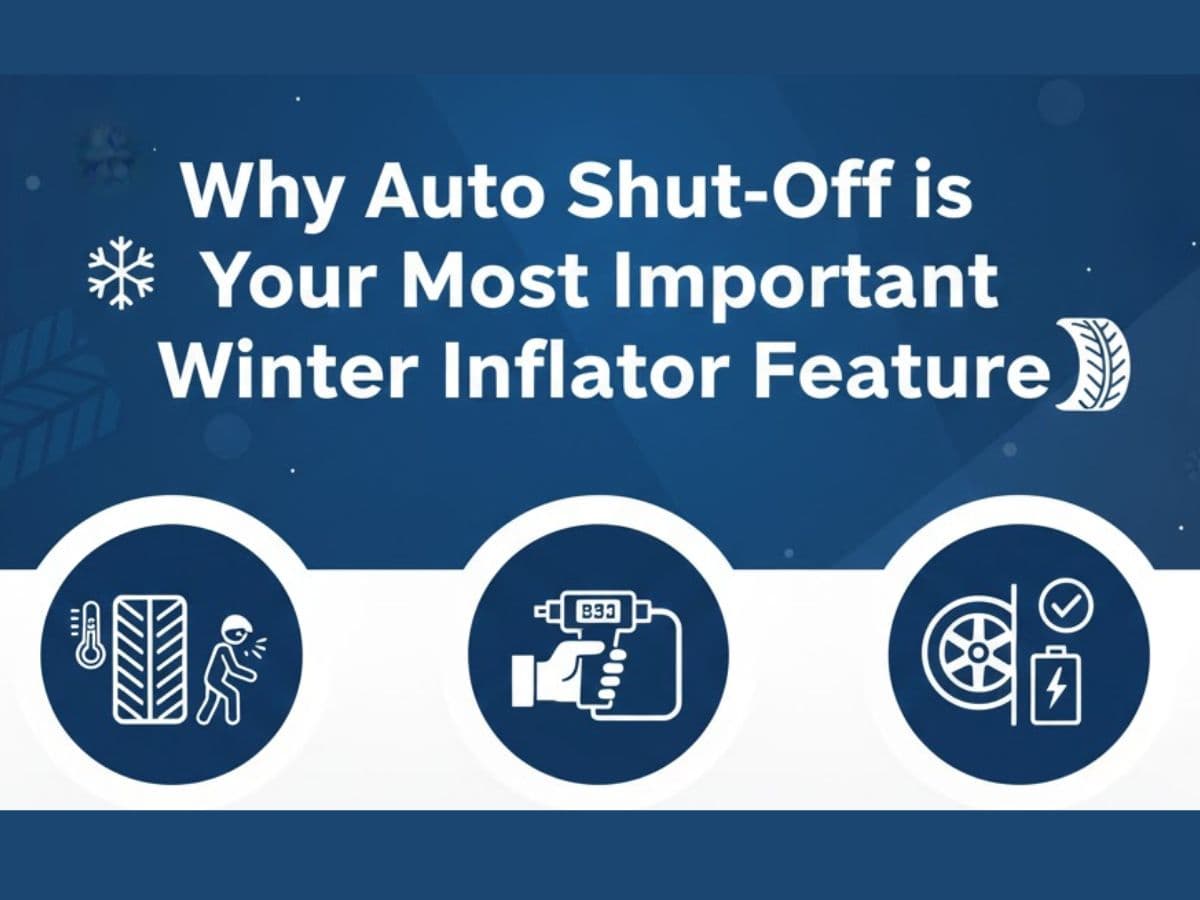
“In winter, the margin for error is much smaller,” experts warn, highlighting a key inflator feature often overlooked: the auto shut-off on your tyre inflator. While many drivers see this as a simple convenience, its role becomes critical as temperatures plummet. During tough winter conditions, this feature is not just about convenience but plays a key role in vehicle stability, tire safety, and confident driving. Why do tyres seem underinflated on a cold morning? The science is simple: air contracts when it gets cold. This natural contraction causes tyre pressure to drop significantly, often triggering your vehicle’s warning light. The instinct is to add air immediately. However, inflating a “cold” tyre is where the risk begins. As you drive, friction heats the tyres, causing the air inside to expand again. A tyre filled to the correct pressure in the cold can become dangerously overinflated after just a short drive. This delicate balance makes precise inflation crucial. This feature allows you to preset your desired pressure. The inflator then automatically stops pumping the moment that exact pressure is reached. It eliminates the guesswork of manually watching a gauge and squeezing the trigger. This accuracy is crucial in winter circumstances, when even a 2-3 PSI discrepancy can affect performance. By keeping your tires inflated to a safe baseline that doesn’t change as the weather does, it keeps you from overcompensating for the cold. Also Read:Netflix Chiefs Address Warner Bros Deal, Pledge Theatrical Releases and Job Security Winter roads already reduce grip with ice, snow, and wet surfaces. Overinflated tyres can turn a bad situation into a dangerous one. Extra pressure hardens the tyre and limits the tread’s grip on the road. During difficult winters, this feature goes beyond convenience and becomes vital for stability, tyre safety, and driving confidence. Auto shut-off helps protect against these combined dangers. The benefits extend past your tyres. An inflator without auto shut-off relies on you to stop it, which can lead to the motor running continuously. In cold weather, this strains the device and can shorten its lifespan. The auto shut-off protects the inflator’s motor by preventing unnecessary operation. For you, it means convenience. Once you set the pressure and rely on the automatic shut-off, you’re free to handle other winter prep, such as cleaning windows, instead of checking a gauge with freezing hands. It guarantees consistent, correct pressure on all four tyres, ensuring balanced handling. A: Those gauges can be inaccurate and often don’t account for cold-tyre inflation principles. Your own inflator with auto shut-off provides more reliable, consistent results tailored to your vehicle. A: You must monitor the pressure gauge extremely carefully, stopping frequently to check. Inflate in small bursts, especially in cold weather, to avoid overshooting the recommended pressure. A: Always check and inflate when tyres are “cold,” meaning the car has been parked for at least three hours or driven less than a mile. This gives you the most accurate baseline reading.
Winter Tyre Inflation: The Critical Role of Auto Shut-Off in Maintaining Vehicle Stability
The Daily Guardian•
Full News
Share:
Disclaimer: This content has not been generated, created or edited by Achira News.
Publisher: The Daily Guardian
Want to join the conversation?
Download our mobile app to comment, share your thoughts, and interact with other readers.