
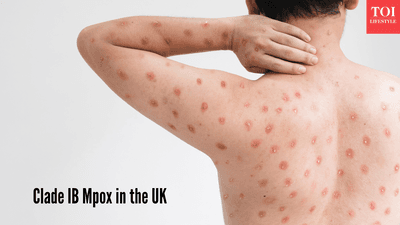
credit: canvaClade I mpox-Ib, indeed now highlighted, puts the virus into fresh headlines and raises new questions about how worried people in the UK should be. While experts still describe the overall risk to the general public as low, they are watching this strain closely because clade I viruses have historically-caused more severe illness and higher death rates than the clade II strain that dominated the 2022 outbreak.Clade I / Ib mpox is a virus that belongs to the Orthopoxvirus genus.Mpox, formerly called monkeypox, is a viral infection in the same family of viruses as smallpox but is usually much milder. The virus comes in different clades-or families. Clade II, the one that spread around the world in 2022, tends to cause fewer deaths--and somewhat milder disease. Clade I, which has been seen largely in Central Africa, has been associated with more severe illness, particularly among young children and people with immune-system compromise.Clade Ib is part of clade I that has now been identified in many countries, including the UK - in large part related to travel rather than widespread community transmission to date. One recent review of the mpox outbreaks from 2022-2025 notes that clade I infections have had case fatality rates - in the range of 3-10 percent in African settings where access to care is limited compared with well under 1 percent for clade II in the 2022 global outbreak.by Taboolaby TaboolaSponsored LinksSponsored LinksPromoted LinksPromoted LinksYou May LikeNita Ambani unveils an innovative treehouse at Nita Mukesh...UndoDonald Trump Jr.'s love life: Marrying Vanessa Trump, dating Kimberly Guilfoyle and engagement to Bettina AndersonThe Times of IndiaUndoExact death rates for the new lineage Ib are still being studied, but it falls under the more severe clade I family.Symptoms seen in clade Ib casesClinically, clade Ib infections look very much the same as other mpox infections. The World Health Organization and UK health agencies describe a familiar pattern. Symptoms usually start 5 to 21 days after infection and often begin with:Fever, chills-and feeling generally unwellHeadache, myalgia--and backacheSwollen lymph nodes - often in the neck, armpits or groinChief complaints include marked tiredness or low energy.This is followed by the appearance of a rash in a few days. This rash may well:flat spots that become raised bumps, which develop into fluid-filled blisters and finally crust over as scabs.Affect the face, arms, legs, palms, soles, mouth, genitals--and anusGive pain, especially in the genital or anal area; a number develop proctitis, an inflammation in the rectum, resulting in anal pain and bleeding--and painful passage of stoolRecent UK reports emphasize that during this current phase, many patients have a limited number of lesions focused on the genital and anal area, often with significant pain rather than a widespread rash.UK situation and death toll so farSince the outbreak in 2022, the UK Health Security Agency has been reporting sporadic mpox cases. Most cases are linked to clade II, sexual networks--and travel. UKHSA and media outlets have reported in December 2025 that a new mpox strain associated with clade I has just been identified in England, again related to travel rather than through sustained community spread.According to UKHSA data and NHS information, the current risk to the wider UK population remains low and, crucially, there have been no mpox related deaths reported in the UK in this recent period.Globally, WHO estimates that from the start of the 2022 outbreak through 2025, there have been over 100,000 confirmed cases and about several hundred deaths, the vast majority in countries where clade I circulates and where access to care can be limited.These numbers may underestimate the true burden in regions with weaker surveillance.Given that clade I viruses have traditionally carried a higher risk of severe disease, UKHSA treats any suspected case of clade I or Ib as a concern for public health, with rapid testing, isolation, contact tracing, and targeted vaccination for those at the highest risk.Who is most at risk of severe disease?Most healthy adults with mpox get better on their own in two to four weeks by taking rest, pain relief medications, fluids--and sometimes antiviral medications. WHO-and recent reviews have identified the following groups as being at particularly higher risk for complications--and death:Young childrenPregnant individualsPeople who have weaker immune systems, such as those with uncontrolled HIV.People with extensive skin disease or very painful anogenital lesionsComplications can also include secondary bacterial skin infections, severe dehydration, pneumonia, eye involvement that threatens vision, and rarely, sepsis or encephalitis.These are the situations where higher severity of clade I becomes particularly important.How the UK is respondingThe UK response combines surveillance, vaccination and clear guidance on when to suspect mpox. UKHSA case definitions focus on people with compatible rashes or proctitis plus risk factors such as close physical or sexual contact with a case, or recent travel to countries with ongoing mpox transmission.The NHS advises anyone with a new, unexplained rash or blisters, especially on the genitals or around the anus, plus fever or swollen glands.What this means for peopleOverview for the vast majority in the UK, clade Ib mpox remains a low probability but-important infection to recognize. The key messages are: Know the symptoms-pain in or near to the genital or anal lesions with fever or swollen glands, in particular. If you think that you may have been exposed, seek advice from a doctor as soon as possible. If you are in an eligible group--follow vaccination and-public health advice.Get an chance to win ₹5000 Amazon Voucher by taking part in India's Biggest Habit Index! Take the survey here
New Mpox Strain Emerges: What You Need to Know About Clade I mpox-Ib
Times of India•
Full News
Share:
Disclaimer: This content has not been generated, created or edited by Achira News.
Publisher: Times of India
Want to join the conversation?
Download our mobile app to comment, share your thoughts, and interact with other readers.