
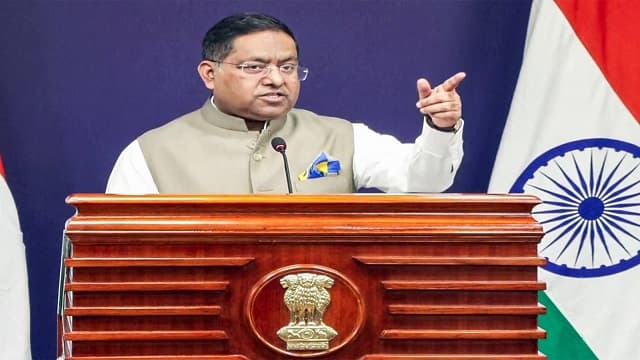
New Delhi: India on Friday reiterated that the Indus Waters Treaty will remain in “abeyance.” This will continue until Pakistan stops supporting cross-border terrorism. Addressing the weekly media briefing, the MEA spokesperson Randhir Jaiswal said the 1960 water-sharing pact continues to be suspended. This follows the April 2025 Pahalgam terror attack. The decision to keep the treaty on hold follows the “Operation Sindoor” military action launched by India in May 2025. This operation targeted terrorist infrastructure in response to the Pahalgam attack that claimed 26 lives. Speaking to the media, Jaiswal emphasised that the treaty would not be restored until there is a credible and irreversible cessation of Pakistan’s support for cross-border terror activities. “The Indus Waters Treaty stands in abeyance in response to Pakistan’s sponsorship of cross-border terrorism,” Jaiswal stated. He also dismissed recent criticisms from Islamabad regarding India’s hydroelectric projects on the Chenab and Beas rivers. Responding to queries regarding comments from the Turkish Foreign Minister, Jaiswal maintained that India’s international engagements are guided by its own foreign policy interests. Addressing concerns about countries maintaining relationships with Pakistan, Jaiswal affirmed that India’s strategic autonomy remains paramount. He stated, “All our international engagements have their own standing and importance.” The operational impact of this suspension is most visible at the Baglihar Dam in the Ramban district of Jammu and Kashmir. More than a year after the treaty’s suspension, the dam’s gates continue to remain closed. This sustained measure, linked to the broader suspension of the IWT, highlights the shift in India’s water management. It also shows a change in hydroelectric strategy in the region. The MEA also addressed ongoing legal disputes over the treaty. India has rejected the May 15, 2026, award by what it calls an “illegally constituted” Court of Arbitration on maximum pondage and treaty interpretation. New Delhi maintains it never recognised the court. Further, it considers all its proceedings and decisions “null and void.” As the IWT enters its second year in abeyance, the situation underscores the hardening of India’s diplomatic and strategic posture. It links regional stability and resource management directly to the issue of state-sponsored terrorism. (ANI) Also Read: India lodges protest with Pakistan against “Gilgit-Baltistan Assembly polls.”
India Suspends Indus Waters Treaty Until Pakistan Stops Supporting Cross-Border Terrorism
Kalinga TV•
Full News
Share:
Disclaimer: This content has not been generated, created or edited by Achira News.
Publisher: Kalinga TV
Want to join the conversation?
Download our mobile app to comment, share your thoughts, and interact with other readers.