
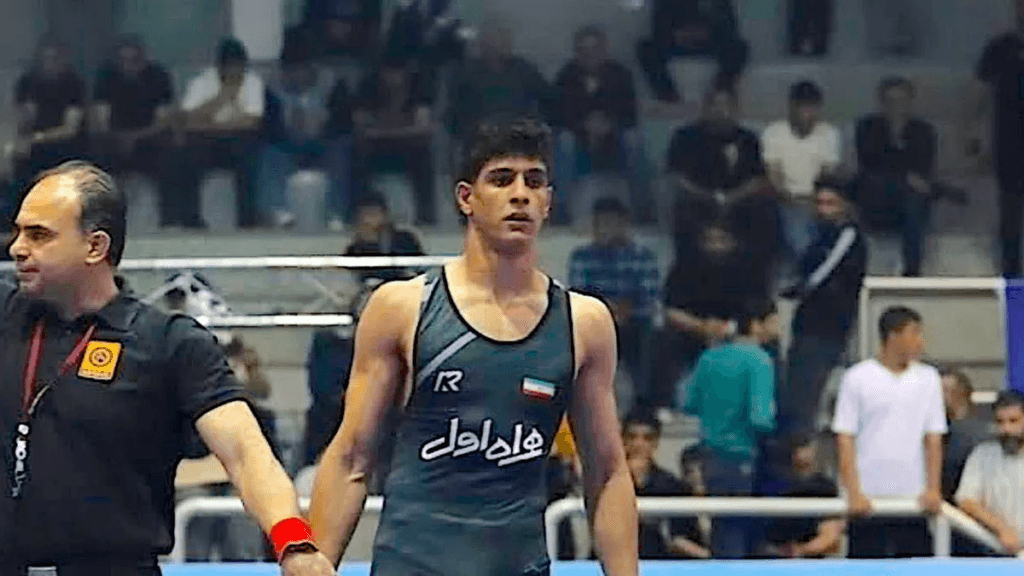
Saleh Mohammadi won a bronze medal representing Iran on the international wrestling stage. On Thursday, the same government he competed for hanged him in public. But this isn’t just one execution; it’s the second time Iran has killed a champion wrestler for dissent , and the pattern reveals something deeper about how authoritarian regimes weaponize sports. The Core Story: Who Was Saleh Mohammadi? Saleh Mohammadi, 19 years old and a member of Iran’s national freestyle wrestling team, was executed by hanging on Thursday, March 19, 2026, in Qom Central Prison. He was hanged alongside two other men, Mehdi Ghasemi and Saeed Davoudi, all convicted of “moharebeh,” a charge that translates to “enmity against God” and carries a mandatory death sentence under Iranian law. The charges stemmed from the January 8, 2026, nationwide protests in Qom, during which two Law Enforcement Command ( FARAJA ) officers were killed. Iranian authorities accused Mohammadi of participating in the killings. He denied the charges in court and stated that his confession had been obtained under torture, according to accounts from his family and legal representatives. His family, teammates, and coaches all testified that Mohammadi was not at the scene of the officers’ deaths, that he was at his uncle’s home at the time. Security camera footage from the area did not capture his face. Human rights organizations say the trio was executed without a fair trial and based on coerced confessions. Mohammadi had won a bronze medal in September 2024 at the Saitiev International Cup in Krasnoyarsk, Russia, competing in Iran’s national freestyle wrestling colors. He was 17 at the time. He was 19 when his government killed him. Context & Global Impact: Why Iran Keeps Targeting Athletes Mohammadi’s execution is not an isolated judicial act. It is part of a documented pattern in which the Iranian regime specifically targets athletes, using their visibility to send a message to the broader population: no one is protected. Navid Afkari, 2020. The most direct parallel. Afkari, a 27-year-old champion Greco-Roman wrestler, was executed in September 2020 for allegedly killing a security guard during 2018 protests in Shiraz. Like Mohammadi, Afkari said his confession was extracted under torture. His execution drew global condemnation — but Iran proceeded anyway. The January 2026 massacre. The protests that led to Mohammadi’s arrest were part of a nationwide uprising on January 8-9, 2026. According to documents reviewed by Iran International, more than 36,500 Iranians were killed by security forces during those two days, making it the deadliest protest crackdown in modern history. 65 athletes identified among the dead. Compiled lists from activists and sports networks have identified at least 65 athletes, coaches, and referees among those killed during the January crackdown. The regime’s targeting of the athletic community is strategic, not incidental. Athletes as symbols. In Iranian culture, wrestling holds a status comparable to football in Brazil or cricket in India. Wrestlers are national heroes. By executing a wrestler, the regime makes a calculated statement: if we will kill someone the nation celebrates, imagine what we will do to you. The “Moharebeh” Machine The charge of “moharebeh,” enmity against God, is Iran’s most powerful legal weapon against dissent. It carries a mandatory death sentence, requires a lower evidentiary standard than murder charges, and is applied almost exclusively to political protesters and dissidents. Human rights organizations, including Amnesty International and Human Rights Watch, have documented hundreds of moharebeh convictions following every major protest wave in Iran. In Mohammadi’s case, the application is particularly troubling. Even by the regime’s own account, Mohammadi was one of many people present during a chaotic street confrontation. The absence of direct evidence, no facial recognition, and contradictory witness testimony suggest the conviction was designed to produce a high-profile execution, not to achieve justice. The International Response Gap Global reaction has been vocal but toothless. Olympic athletes have spoken out on social media. Human rights organizations have issued condemnations. But the structural problem remains: Iran faces no meaningful consequences for executing its own athletes. The IOC did not suspend Iran after Navid Afkari’s execution in 2020, and there is no indication it will do so now. International sporting federations have consistently declined to impose bans despite repeated documented cases of athletes being imprisoned, tortured, or killed for political expression. The gap between rhetorical condemnation and actual consequences is itself a message, one that the Iranian regime has clearly received. What’s Next: More Executions Expected Human rights groups warn that Mohammadi’s execution is likely the beginning, not the end, of a wave of death sentences tied to the January protests. With dozens of athletes and hundreds of other protesters still detained, the regime appears to be using executions as a systematic deterrent. The question for the international sporting community is whether condemnation without consequence is a response at all or simply permission. Frequently Asked Questions Who was Saleh Mohammadi? A 19-year-old Iranian national freestyle wrestling team member who won a bronze medal at the 2024 Saitiev International Cup. He was executed on March 19, 2026 for alleged participation in January protest violence, charges he denied, saying his confession was obtained under torture. Has Iran executed athletes before? Yes. In 2020, champion wrestler Navid Afkari was executed under similar circumstances, convicted of killing a security guard during protests, with a confession his family said was extracted under torture. What were the January 2026 protests? A nationwide uprising on January 8-9, 2026, driven by economic crisis and opposition to Iran’s military policies. More than 36,500 people were reportedly killed by security forces in two days, making it the deadliest protest crackdown in modern history. Tags: Saleh Mohammadi
Iran Executes Champion Wrestler Saleh Mohammadi After Nationwide Protests
Breezy Scroll•
Full News
Share:
Disclaimer: This content has not been generated, created or edited by Achira News.
Publisher: Breezy Scroll
Want to join the conversation?
Download our mobile app to comment, share your thoughts, and interact with other readers.