
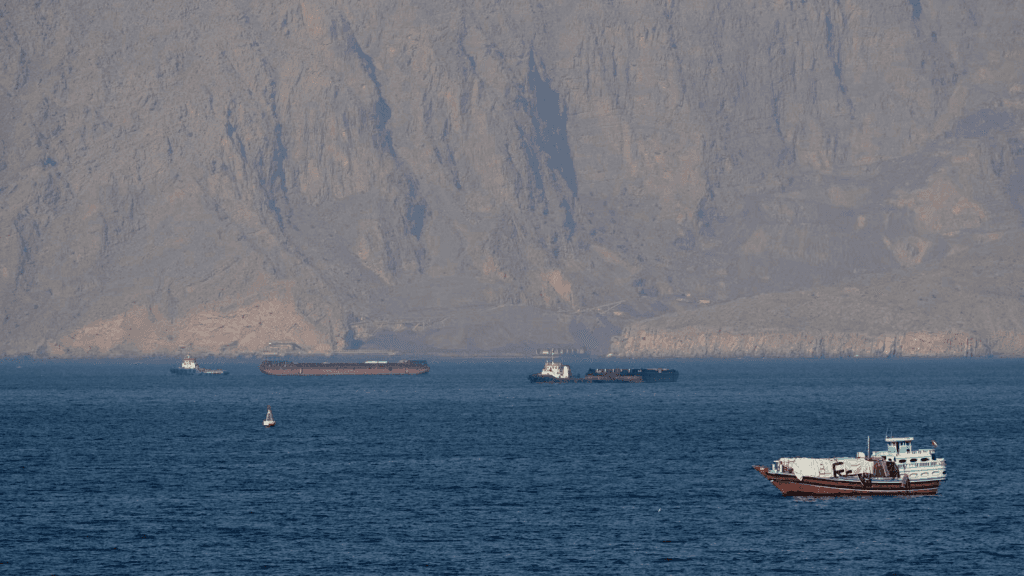
Tensions in the Middle East escalated sharply on Saturday after reports that Iranian forces opened fire on merchant vessels attempting to pass through the Strait of Hormuz. The incident, which reportedly forced at least two Indian tankers to reverse course, underscores just how fragile the current ceasefire remains—and how quickly global trade routes can become flashpoints. Early details remain limited, but multiple sources point to a coordinated enforcement of a renewed Iranian blockade of one of the world’s most critical shipping corridors. According to maritime security reports, merchant vessels navigating the Strait of Hormuz came under gunfire from Iranian forces. The incident reportedly occurred about 20 nautical miles northeast of Oman. The United Kingdom Maritime Trade Operations (UKMTO), which monitors shipping threats in the region, said a tanker was approached and fired upon by two gunboats linked to Iran’s Islamic Revolutionary Guard Corps (IRGC). Despite the confrontation, UKMTO said the targeted tanker and its crew were safe, though the vessel’s identity has not been disclosed. Iranian state media claimed that two Indian vessels were forced to retreat westward after being warned and fired upon by Iranian naval units. One of the vessels was described as: While independent confirmation is still emerging, the report highlights how quickly commercial shipping—including Indian energy imports—can become entangled in geopolitical tensions. The Strait of Hormuz is one of the most strategically important waterways in the world. Any disruption—even temporary—can ripple across global energy markets. The reported firing came just hours after Iran announced it was reimposing restrictions on the strait, reversing a brief reopening tied to negotiations with the United States. In a televised statement, Iranian military officials accused Washington of: Iran warned that: While there has been no immediate detailed response to this specific incident, US policy in the region remains firm. Donald Trump has previously stated: This creates a volatile standoff: That tension is now playing out directly in commercial shipping lanes. Shipping sources told Reuters that several vessels received direct radio communications from Iranian naval forces. This type of communication is significant. It signals: Even limited disruptions in the Strait of Hormuz can have outsized consequences. India, which relies heavily on imported oil, is particularly exposed to such disruptions. As reports of the incident emerged, Mojtaba Khamenei issued a strong statement praising Iran’s military capabilities. He emphasized: The tone was clear: Iran is signaling both capability and intent. This incident fits into a broader pattern of rising tensions across key maritime chokepoints. Recent developments include: Together, these suggest a region where: The situation remains fluid, but several scenarios are likely:
Iranian Forces Open Fire on Merchant Vessels in Strait of Hormuz, Escalating Tensions
Breezy Scroll•
Full News
Share:
Disclaimer: This content has not been generated, created or edited by Achira News.
Publisher: Breezy Scroll
Want to join the conversation?
Download our mobile app to comment, share your thoughts, and interact with other readers.