
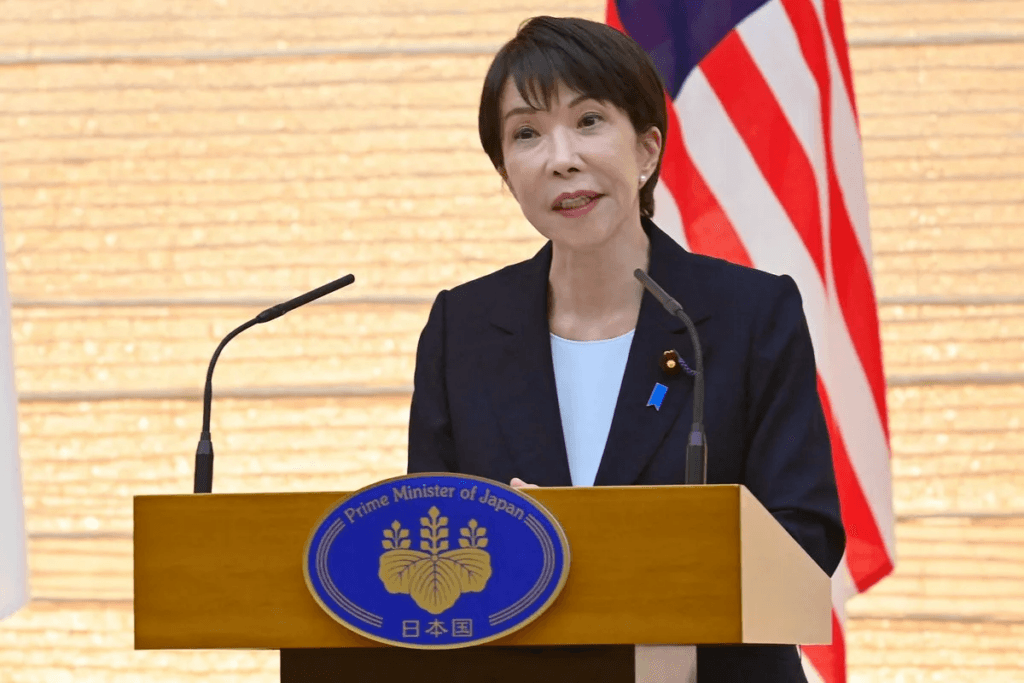
A family decision has unexpectedly become a political flashpoint in Japan. Prime Minister Sanae Takaichi is facing public scrutiny after reports emerged that her 19-year-old step-grandson enrolled in a Chinese university earlier this year, a development that has sparked debate over politics, personal freedom, and the increasingly strained relationship between Tokyo and Beijing. The controversy comes at a particularly sensitive moment. Relations between Japan and China are at their lowest point in years, with disputes over Taiwan, trade restrictions, defense policy, and critical supply chains continuing to drive tensions between Asia’s two largest economies. While the enrollment itself is a private matter, critics and supporters alike have seized on it as a symbol of the complex relationship between personal choices and geopolitical rivalries. According to reports, Ren Yamamoto, the 19-year-old son of Takaichi’s stepson, began a four-year undergraduate program at a leading Chinese university in April. The reports claim that Takaichi learned about the decision shortly before his departure and was unhappy with the move but did not attempt to intervene. The news quickly gained traction online, where users debated whether the decision reflected a contradiction between Takaichi’s political positions and her family’s educational choices. Some critics accused the prime minister of hypocrisy, given her hardline stance toward China. Others argued that an adult family member’s decision about where to study should not be interpreted as a reflection of government policy. Under normal circumstances, a student’s decision to study abroad would attract little political interest. However, the situation is unfolding against the backdrop of worsening relations between Japan and China. Since becoming prime minister, Sanae Takaichi has advocated stronger security cooperation with allies and maintained a firm position on regional security issues, particularly regarding Taiwan. Her comments suggesting that a Chinese attack on Taiwan could have implications for Japan’s security generated strong reactions from Beijing and contributed to an already tense diplomatic environment. As a result, even personal developments connected to the prime minister are now being viewed through a geopolitical lens. Reaction online has been sharply divided. Social media users on X accused her of political hypocrisy, though others defended the move by noting that children of Chinese officials frequently study in the West. Some users questioned how a family member of one of Japan’s most outspoken China critics could choose to pursue higher education in China. The criticism largely centered on symbolism rather than the student’s decision itself. For these commentators, the enrollment appeared inconsistent with the prime minister’s public rhetoric regarding China. Others defended both Takaichi and her step-grandson, arguing that educational choices should remain separate from political disputes. Several users noted that children and relatives of government officials around the world frequently study in countries whose governments may have political disagreements with their own. Supporters also pointed out that many Chinese political and business elites have historically sent family members to universities in the United States, the United Kingdom, Australia, and other Western countries despite geopolitical tensions. The controversy has gained traction largely because of the broader state of bilateral relations. China views Taiwan as part of its territory and has repeatedly warned foreign governments against actions it perceives as supporting Taiwanese independence. Japan has increasingly emphasized the importance of stability in the Taiwan Strait, arguing that any conflict could directly affect Japanese security and regional trade routes. Differences over Taiwan have become one of the most sensitive issues in the relationship. The diplomatic disputes have increasingly spilled into economic policy. In recent months, Beijing has implemented a series of trade-related restrictions affecting Japanese industries. Reports indicate that China has tightened export controls on several strategically important materials and technologies while also maintaining restrictions on certain Japanese imports. These measures have raised concerns among manufacturers that rely on Chinese supply chains. One of the most significant areas of friction involves rare earth minerals and other critical materials used in advanced manufacturing. Rare earth elements are essential for: China remains a dominant supplier of many of these materials, giving it significant leverage in global supply chains. Restrictions on exports can have consequences far beyond Japan, affecting industries and manufacturers worldwide. The dispute highlights a growing challenge facing governments and businesses. While political competition between countries is intensifying, economic ties remain deeply interconnected. China is one of Japan’s largest trading partners, while Japanese companies maintain significant investments and operations across China. The result is a relationship characterized by both strategic rivalry and economic dependence. Historically, the educational choices of political leaders’ relatives have occasionally generated headlines, but they rarely have a direct impact on government policy. However, such stories often resonate because they reveal the contradictions that can exist in an interconnected world. A government may pursue a confrontational foreign policy while families, businesses, students, and researchers continue to maintain cross-border relationships. The Takaichi controversy illustrates this reality. Even as political tensions rise between Tokyo and Beijing, educational exchanges, tourism, trade, and cultural ties continue to connect people across both countries. The debate surrounding Takaichi’s step-grandson is ultimately about more than a university enrollment. It reflects broader anxieties about national identity, geopolitical competition, and the increasingly blurred line between public office and private life. For critics, the story has become a symbol of perceived inconsistency. For supporters, it serves as a reminder that family members are individuals with their own aspirations and choices. As Japan and China navigate one of the most challenging periods in their modern relationship, even seemingly personal decisions can quickly become part of a much larger political conversation.
Japan's Prime Minister Faces Scrutiny Over Step-Grandson's University Enrollment in China
Breezy Scroll•
Full News
Share:
Disclaimer: This content has not been generated, created or edited by Achira News.
Publisher: Breezy Scroll
Want to join the conversation?
Download our mobile app to comment, share your thoughts, and interact with other readers.