
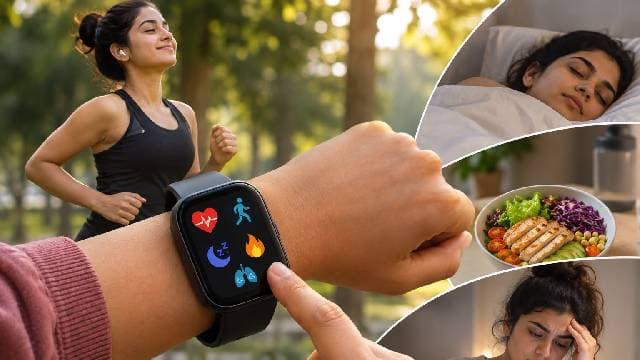
Fitness trackers and smartwatches have become popular companions for people trying to stay healthy. Whether it is checking how many steps they have walked, monitoring calories burned during a workout, or analysing sleep quality, these devices make health data accessible with just a glance at the wrist. But an important question remains: Are fitness trackers genuinely helping people improve their health, or are they making users increasingly dependent on numbers and daily targets? According to health experts, wearable devices can be useful tools for building healthier habits, but their readings should not always be treated as medically accurate. What can a fitness tracker actually monitor? Depending on the device, fitness trackers can measure or estimate several aspects of physical activity and health. These measurements can help users understand their activity patterns and identify changes over time. However, the availability and reliability of these features vary across devices. The accuracy problem: Not every number is reliable One of the biggest misconceptions about fitness trackers is that every figure displayed on the screen is precise. A Cleveland Clinic report published in July 2026 noted that step counts are among the most validated measurements, while active and resting heart rates also appear reasonably accurate. However, calorie expenditure, stress scores, and sleep-quality measurements are considerably less reliable. For instance, a tracker may estimate that a person has burned 500 calories during a workout, but the actual number could be different. Similarly, a low sleep score does not necessarily mean someone has had poor-quality sleep. This is because many advanced measurements are calculated using algorithms and sensor data rather than direct medical measurements. Can fitness trackers make people anxious? While these devices are designed to encourage healthier habits, constantly monitoring health statistics can sometimes create unnecessary pressure. Some users become overly focused on completing daily step targets, achieving perfect sleep scores, or maintaining specific calorie goals. Missing a target may leave them feeling guilty, even when they have had an otherwise productive and healthy day. Health experts have also cautioned that repeated alerts and constant monitoring can contribute to health anxiety. Instead of becoming motivated, some users may start worrying excessively about normal fluctuations in their readings. How to use a fitness tracker without becoming obsessed Fitness trackers work best when they support healthy routines rather than dictate them. Here are a few ways to use them sensibly: Consult a healthcare professional if you repeatedly notice unusual readings or experience concerning symptoms. Can a smartwatch replace a doctor? The simple answer is no. Although some wearable devices can flag possible irregular heart rhythms or unusual changes in health measurements, they cannot provide a complete medical diagnosis. A smartwatch ECG, for example, is not equivalent to a full clinical electrocardiogram. Doctors can use wearable data as additional information when evaluating a patient, but medical tests and professional assessments remain essential.
The Accuracy Problem: Can Fitness Trackers Make You Anxious?
Kalinga TV•
Full News
Share:
Disclaimer: This content has not been generated, created or edited by Achira News.
Publisher: Kalinga TV
Want to join the conversation?
Download our mobile app to comment, share your thoughts, and interact with other readers.