
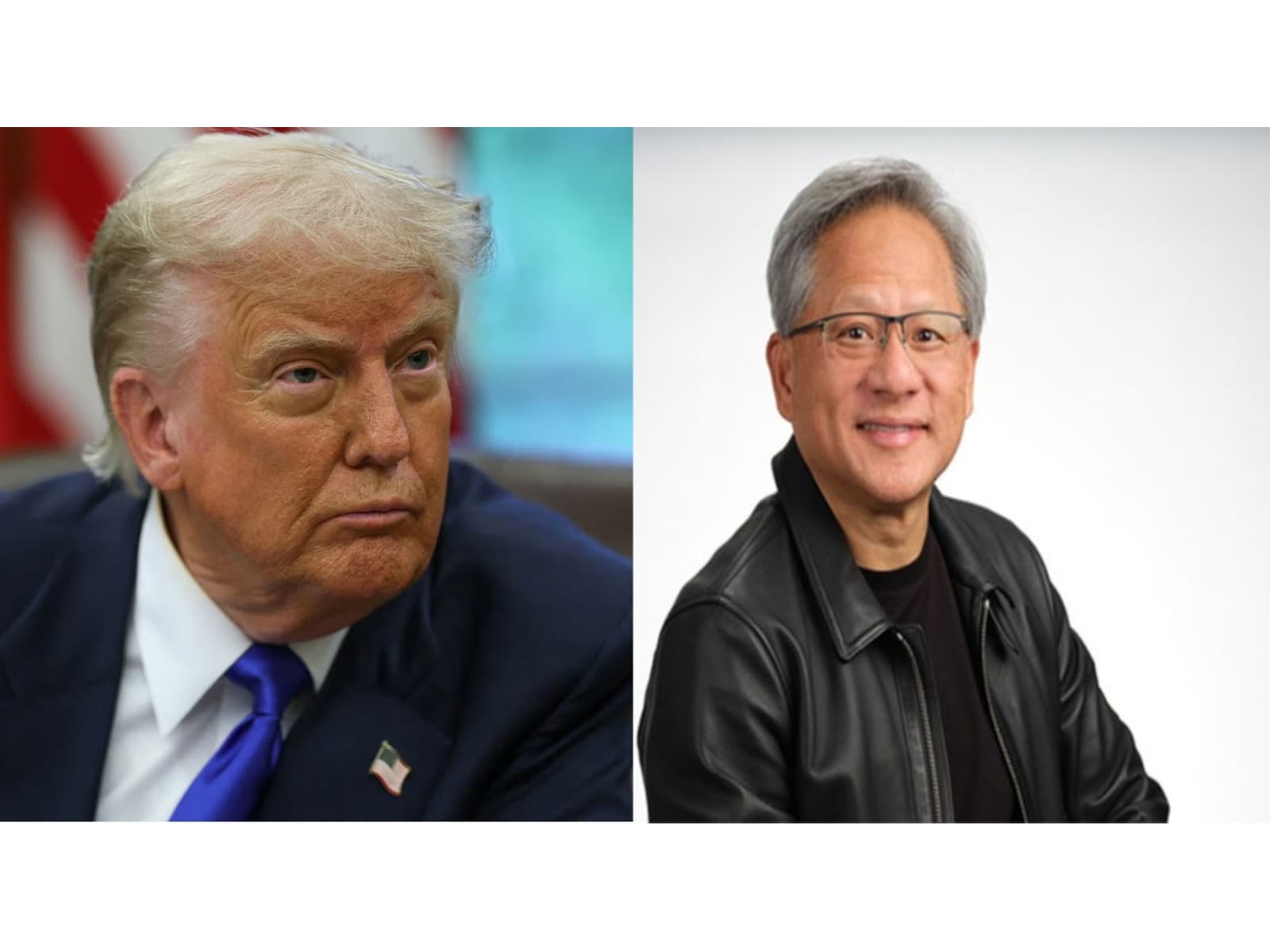
Washington [US], May 14 (ANI): The United States has approved around 10 Chinese companies to purchase Nvidia's H200 artificial intelligence chips, but no deliveries have taken place so far, according to a Reuters report citing sources familiar with the matter. The report said the delay has left a major technology deal in uncertainty as Nvidia Chief Executive Officer Jensen Huang seeks a breakthrough during his visit to China this week. According to Reuters, Huang was not initially listed in a white house delegation to China but he joined US President Donald Trump's trip to Beijing after receiving an invitation from Trump. Trump picked him up in Alaska en route to a summit with Chinese President Xi Jinping, raising hopes the trip could finally unlock stalled efforts to sell the H200 chips in China. The Reuters report highlighted that the issue reflects the growing tensions in the US-China technology rivalry, which is affecting even approved trade deals involving advanced semiconductor technology. Before tighter US export restrictions, Nvidia controlled around 95 per cent of China's advanced chip market. China earlier accounted for 13 per cent of Nvidia's revenue, and Huang had estimated that China's AI market alone could be worth USD 50 billion this year. Sources told Reuters that the US Commerce Department has approved companies including Alibaba, Tencent, ByteDance and JD.com to buy Nvidia's H200 chips. A few distributors, including Lenovo and Foxconn, have also reportedly received approval. Under the licensing terms, each approved customer can purchase up to 75,000 chips. Buyers can either purchase directly from Nvidia or through approved distributors. Lenovo confirmed to Reuters that it was among the companies approved to sell H200 chips in China under Nvidia's export licence. However, despite receiving US approval, no actual sales have been completed. Reuters reported that Chinese companies became cautious after guidance from Beijing, while pressure has also increased within China to block or tightly examine such purchases. US Commerce Secretary Howard Lutnick had earlier stated during a Senate hearing that "the Chinese central government has not let them, as of yet, buy the chips, because they're trying to keep their investment focused on their own domestic industry." The report noted that China has been increasing efforts to develop homegrown AI chips. Companies such as DeepSeek are increasingly highlighting their use of domestic chips, including those developed by Huawei. The report further said that Nvidia's position in China has become increasingly difficult due to US export controls. Huang has earlier warned that such restrictions were weakening Nvidia's market position in China and reducing its share in the AI accelerator market. It also highlighted that the path to a completed sale has been obstructed by a tangle of requirements on both sides. U.S. rules issued in January require Chinese buyers to demonstrate they had installed "sufficient security procedures" and would not use the chips for military purposes. Nvidia must also certify sufficient inventory in the United States. Trump negotiated an arrangement under which the U.S. would receive 25% of the revenue from the chip sales -- a structure that requires the chips to pass through U.S. territory before being shipped to China, as U.S. law does not permit the direct imposition of export fees. In addition, the arrangement negotiated by the Trump administration reportedly requires the chips to pass through US territory before being shipped to China. Scrutiny in China has also intensified after the State Council issued two recent supply chain security regulations, prompting a government-wide effort to identify and eliminate potential foreign dependencies in critical technology infrastructure, the fourth source said. According to the report, the continued delay in deliveries has also been supported by some policymakers in Washington, who believe that allowing Nvidia to sell more chips to China could reduce the US advantage in artificial intelligence technology. The continued delay has been welcomed by China hardliners in Washington, who dismiss Trump administration claims that such sales would deter Chinese rivals from closing the gap with U.S. chip designers. "Any deal that allows Nvidia to sell more chips to China means fewer Nvidia chips for U.S. firms, and a smaller U.S. lead in AI over China," said Chris McGuire, senior fellow for China and emerging technologies at the Council on Foreign Relations. "It is remarkable that President Trump keeps getting convinced to put Nvidia's interest ahead of America's." (ANI)
US Approves Chinese Companies for Nvidia AI Chip Purchases, But Deliveries Remain Uncertain
ANI News•
Full News
Share:
Disclaimer: This content has not been generated, created or edited by Achira News.
Publisher: ANI News
Want to join the conversation?
Download our mobile app to comment, share your thoughts, and interact with other readers.