Achira News Logo
Achira News
D
Dainik Jagran
Sep 21, 2026, 09:16 AM
Tanvi's Impressive Bharatanatyam Performance at Arangetram Event

Tanvi's Impressive Bharatanatyam Performance at Arangetram Event

Kumari Tanvi's Bharatanatyam Arangetram was held at India International Centre Auditorium, Lodi Estate, New Delhi. Under the guidance of Guru Smt. Priya Srinivasan, Tanvi gave an impressive performance of her dance Sadhana and art. Her performances were appreciated by the audience present at the event. Tanvi started learning Bharatanatyam at a young age. With years of Sadhana and Guru's guidance, she made her mark in this classical dance. She is a graded Bharatanatyam artist of Doordarshan. Tanvi has performed at prestigious cultural forums of the country as well as at diplomatic and international forums. She has also contributed as a performer in various classical dance productions. Along with dance, Tanvi has also achieved achievements in the education and professional field. She has done BTech in Information Technology and is currently working as a Cyber Security Engineer in the corporate sector. During the Arangetram, Alarippu, Jathiswaram, Keerthanam, Varnali, Javalam, Thillanam, Thillana, etc., were performed by various artists.
77 shares
😊
D
Dainik Jagran
Sep 21, 2026, 08:51 AM
UGC NET December 2026 Application Form: Exam Dates and Eligibility Criteria Announced

UGC NET December 2026 Application Form: Exam Dates and Eligibility Criteria Announced

UGC NET December 2026 Application Form: The National Testing Agency (NTA) has released an important update for candidates preparing for the UGC NET December 2026 exam. Applications for the UGC NET December 2026 exam can be started soon. Applications for the December session exam last year were started on October 7. It is expected that the notification for the exam will be issued in early October. The NTA has already announced the exam date for the UGC NET December exam. According to the released exam calendar, the UGC NET (December Cycle) exam will be held from 14 to 19 December 2026 at designated exam centers across the country. To fill the UGC NET December 2026 application form, the candidate must be a post-graduate in the relevant subject or studying in the final year. Candidates who have completed 4 years of graduation are also eligible to participate in this exam. In addition, the maximum age of the candidate applying for JRF should not be more than 31 years. There is no upper age limit for NET and there is no upper age limit for the exam.
63 shares
😐
K
Kalinga TV
Sep 21, 2026, 05:34 AM
RITES Recruitment 2026: Manager-PAPIS Post Openings

RITES Recruitment 2026: Manager-PAPIS Post Openings

RITES recruitment 2026: The Rail India Technical and Economic Service (RITES) has released a notification for the recruitment of a manager post on its official website. The number of vacancies for the post is 1. The last date to apply for the post is dated as October 4. The candidate will have to undergo a walk-in interview on October 8. To get detailed information about the recruitment and the walk-in interview, candidates must visit the official website and read it. Important details: Post name: Manager-PAPIS Number of posts: 1 Application process starting date: September 14 Application process ending date: October 4 Walk-in interview date: October 8 Admit card issuance date: October 5 Application Mode: Online Job type: Contract-based Eligibility Criteria: Candidate must have a degree in Diploma/B.E./B. Tech in Mechanical, Electrical, Electronics, Electronics & Telecommunication, or an equivalent discipline. Age limit for this post is a maximum of 40 years. Diploma-passed candidates must have a minimum of 10 years of post-qualification experience, with a minimum of 2 years of experience in Installation & Commissioning/Maintenance/Supervision of metro rolling stock PAPIS System. Degree-passing candidates must have a minimum of 4 years of post-qualification experience with a minimum of 2 years of experience in Installation & Commissioning/Maintenance/Supervision of metro rolling stock PAPIS System. Application Fee: The application fee is not mentioned in the official notification of the recruitment advertisement. Age Relaxation: SC/ST Category: 5 years OBC-NCL Category: 3 years Persons with Benchmark Disabilities (PwBD): 10 Years Salary: Pay Scale: INR 50,000-1,60,000 Allowances: Basic pay and DA, fixed/variable allowances @ 23% of Basic Pay, HRA/Lease, Contribution to PF, Gratuity as per the Payment of Gratuity Act. Selection Process: Document verification Interview How to Apply: The candidates need to submit the application form before the deadline. Visit the official website. Find the recruitment notification. Fill out the application form with correct details. Upload the documents that have been asked in the application form. Pay the application fee (if applicable). Once again, check all the details before clicking on the submit button. Take a screenshot or download the application form for future reference.
14 shares
😐
D
Dainik Jagran
Sep 21, 2026, 04:17 AM
Madhya Pradesh Extends Deadline for MSPSTET 2026 Application Forms

Madhya Pradesh Extends Deadline for MSPSTET 2026 Application Forms

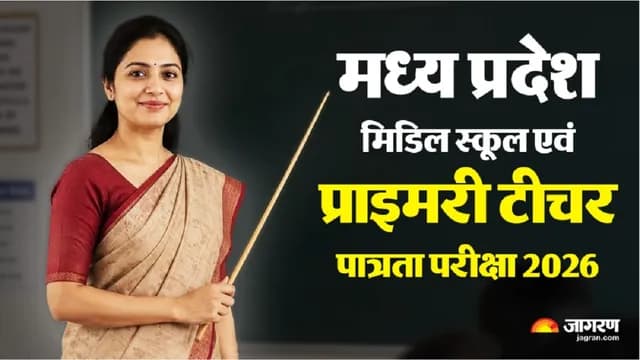
Madhya Pradesh Middle School and Primary Teacher Eligibility Test 2026: The Madhya Pradesh Selection Board, Bhopal (MPESB) has extended the last date for submission of application form for MSPSTET 2026 till October 5. If there is a mistake while filling the form, candidates will be able to correct it by October 6, 2026. As per the Supreme Court order, it has been made mandatory for all working teachers to pass the TET. In this case, the examination is being conducted for teachers teaching in primary and secondary classes. Along with filling the application form, all class teachers already in service will have to deposit a fee of Rs. 1000 as fee. Apart from this, the MP Portal will have to deposit Rs. 60 on applying through kiosks and Rs. 20 on logging in form from registered citizen users.
70 shares
😐
I
Indian Express
Sep 21, 2026, 03:26 AM
BenQ's Smart Classrooms Revolutionize Education Technology in India

BenQ's Smart Classrooms Revolutionize Education Technology in India

A decade ago, classrooms in India meant blackboard, chalk, and at best a teacher’s laptop. This was when Taiwanese display maker BenQ entered the Indian market. Today, the company claims that education accounts for almost 30 per cent of its India business and that it holds over 60 per cent of the country’s installed base of smart classrooms. These figures were shared by Rajeev Singh, managing director of BenQ India and South Asia. In a recent interview with the indianexpress.com, Singh opened up about BenQ’s changing role as an education technology specialist. “If a school doesn’t have a smart class, I think parents will think twice before putting their kid into that school,” Singh said while talking about the evolution of technology for education. The display maker is leaving no stone unturned in its pursuit of becoming a household name when it comes to education technology. Singh revealed that the journey has been a transformative one. The early challenge, however, he said, was hardware. Conditions in Indian classrooms, he said, are “very different” from those elsewhere – most are not air-conditioned, are dusty, and the electricity supply has been historically irregular, with frequent voltage spikes. According to Singh, projects that were not optimised for that environment would fail frequently. BenQ’s response to this was India-specific models built to withstand classroom temperatures of up to 50 degrees, a dust-proof engine that keeps particles away from critical components, and electronics designed to withstand surges. Singh said that the same approach has since been applied to the company’s interactive flat panels. Over the years, alongside hardware, BenQ also partnered with software and content companies such as Educomp, Extramarks, Next Education, Tata ClassEdge, HCL Learning and NIIT, which had lesson material but no devices. The outcome was the ‘smart class’ that comprised a projector or interactive board, speakers and digital content delivered as a single package. According to Singh, this is “a very unique business model in the world”, adding that India was the only market where the solution was sold as one bundle. He said that buyers elsewhere were purchasing projectors and content separately. And this adoption began in private schools before governments followed. By Singh’s account, about seven lakh Indian classrooms now have a projector or interactive flat panel, of which more than four lakh were supplied by BenQ. The company had a turnover of about Rs 695 crore in India last year, and Singh revealed that the company expects to cross Rs 1,000 crore this year. With over a million government schools, India presents a unique opportunity to companies like BenQ. Singh shared that India is home to over one crore government classrooms, out of which nearly four lakh have been turned into smart classes. “Our adoption rate, in terms of number of classrooms, not the number of children, is less than 5%. So the balance is yet to happen,” he said. BenQ has worked with state governments, including Uttar Pradesh, Maharashtra, and Punjab. Its first Delhi government project, which Singh said began about six months ago, covered about 7,000 classrooms. He added that deployment rates are rising each year, but the sheer number of schools means modernisation may take time. When asked about teacher training, Singh offered a mixed picture on teacher readiness. Younger teachers adapt faster, he said, while those who have taught in one way for 20 to 30 years find it difficult. However, familiarity with smartphones and touchscreens is helping them. The executive also shared that the company runs physical and virtual training for private customers, and district-level sessions for government projects. Singh said teacher-training institutes are increasingly deploying interactive panels, but that expansion is not keeping pace with the need. When asked about BenQ’s premium positioning, Singh acknowledged the products carry a higher price but pointed to a three-year on-site service commitment, including installation and initial training, offered regardless of location. That, he said, gives customers “peace of mind”. Talking about AI, Singh said BenQ is now in its second generation of AI-enabled panels. While the first relied on cloud processing, which often led to delays and a constant need for internet access, the newer panels come with AI chipsets that handle much of the processing on the device. Singh described this approach as edge AI and said only BenQ currently offers it among its peers. When asked how he sees India’s education technology landscape changing over the next three to five years, Singh said he expects classroom panels to be linked with students’ own tablets, so tests can be scored on the spot and AI can flag weak topics for individual attention. Delays in finding a struggling student, which earlier took weeks or months, have been a persistent problem. For education, BenQ is also promoting Active Floor, a ceiling-mounted projector that turns the floor into an interactive surface, with more than 18,000 templates for gamified early-years lessons. Singh said installations have already begun across India. According to him, this format prevents eye strain that usually occurs with increased screen time, as children look at reflected light on the floor instead of a screen. “You’re not looking at the projector. You’re looking at the floor, and the floor is reflected light. There is zero harm to your eyes.” When asked about responsible technology use, Singh urged schools and other stakeholders to take a “360-degree view” of procurement rather than buying panels and content separately. He also added that virtual classrooms are a way for absent students to keep up with lessons.

13 shares
😐
A
ABP News✓
Sep 21, 2026, 01:34 AM
Ace Your UPPCS Interview: Tips for Effective Communication

Ace Your UPPCS Interview: Tips for Effective Communication

After the written exam, the interview is also an important stage for the candidates preparing for UPPCS. Many students prepare well for the written exam, but they start getting nervous about the questions asked at the time of the interview. The interview not only looks at the textbook information, but also focuses on how the question is understood in the interview, how it can be thought out and how to put your point forward. In such a situation, it is important to practice answering questions and putting your point forward along with studying before the interview. If you are also preparing for the UPPCS interview, then you can improve your preparation with the help of these easy tips. The interview can be asked many general questions about it at the beginning. So have a good idea about your name, education, college, district, village or city and your interests. If you have mentioned a topic as your interest or hobby, then answer the questions related to it in a similar way.
76 shares
😐
I
Indian Express
Sep 21, 2026, 12:46 AM
Why Public Goods Remain Weak Electoral Issues in India

Why Public Goods Remain Weak Electoral Issues in India

A straightforward proposition at the heart of public economics is that in an electoral democracy, citizen preferences should influence the nature and quality of public good provision. Politicians seek votes; voters care about outcomes; governments therefore have an incentive to respond. Governments need not be benevolent for democracy to work. They merely need to find it costly to ignore sufficiently large numbers of voters. That is the theory. The more difficult question is whether and how this transmission mechanism works in practice. Consider the quality of the school a child attends, whether a competitive examination such as NEET is conducted fairly, whether water comes through the tap, whether electricity is available, whether the local road remains functional or whether the air outside is fit to breathe. These affect welfare directly and yet they have largely remained surprisingly weak electoral issues in India. Governments lose elections, yes, but it is hard to tell if they have been defeated because the local school taught badly, or if buses were persistently unreliable, or the groundwater was contaminated, or urban air had crossed safe levels. Why does an intensely felt private grievance so often fail to become a political demand? Albert Hirschman, an economist, provided one part of the answer: Exit and voice. When a service deteriorates, users can demand that it improve, which is voice. Or they can abandon it for an alternative, which is exit. India has developed an extraordinary capacity for private exit from public failure. Unreliable electricity produces the inverter or generator; uncertain water supply produces the borewell, tanker and purifier; weak public transport produces the scooter and car; poor government schooling produces private schooling; inadequate public healthcare produces the private clinic; weak security produces the guard and gated colony. Each decision is individually rational. Together, they reflect a political equilibrium in which public failure becomes easier to tolerate because those with the resources and influence to demand reform have partly insulated themselves from it. Where richer and politically effective users remain dependent on public provision, pressure for reform is stronger. Where they exit, accountability weakens. Take passport services, railway reservations and rural elementary education as a contrast. Passport and railway services, which are heavily used by the middle classes, have experienced much stronger anti-corruption reform. Elementary schooling, from which better-off households exited, did not experience comparable pressure. The exit of richer citizens reduced pressure for reform, leaving poorer users to cope with weaker public systems. A public service may matter enormously to welfare and still have little electoral salience. The more recent politics of welfare suggests that governments appear to receive clearer electoral returns when benefits are visible, attributable and delivered directly to households. Piped water, LPG connections, electricity connections, toilets, food transfers and cash benefits differ from school quality or clean air in an important respect. The beneficiary can usually identify both the benefit and its political source. Ahead of the 2024 general election, many women voters directly linked their support for the government to visible improvements in piped water, cooking gas, more reliable electricity and cash transfers. This helps explain the rise of competitive welfarism. Governments increasingly prefer benefits that people can see, use and clearly associate with who delivered them. This may explain, at least in part, why poor public services can coexist with vigorous electoral democracy. Dissatisfaction is not enough. Citizens need information about the failure; they need some agreement about who is responsible; the problem must become sufficiently salient to outweigh competing electoral concerns, and political parties must offer a meaningful alternative. A bad government school may be deeply important to a parent and still fail to determine her vote if employment, inflation, caste, religion, welfare benefits or the identity of the candidate appear more pressing during voting. The weakness is, therefore, not that voters fail to care about public goods. It is that preferences must pass through several stages before they become electoral pressure. There is an additional difficulty. Political competition is partly also about the supply of choices, not simply the demand expressed by voters. If competing parties offer no meaningful difference on school quality or air pollution, voters can’t readily use the ballot to express a preference on those dimensions. A constituency can contain thousands of parents unhappy with its schools without education becoming electorally decisive if no serious candidate chooses to compete on school performance. The existence of a grievance does not automatically create a political market for its solution. This is where the recent agitation associated with the Cockroach Janta Party becomes interesting. Its initial focus on competitive examinations and paper leaks is not as narrow as it may appear. Examinations sit at an unusually sensitive point in contemporary India. Families invest enormous amounts of money and time in preparation for scarce university places and public employment. The examination system offers one basic assurance: Whatever the inequalities before the examination, the rules governing selection will at least be fair. A paper leak or compromised selection process creates a grievance that is hard to rationalise away as an ordinary administrative failure. School failure in India has traditionally been dispersed: An absent teacher in one village, a broken toilet in another school, a leaking roof somewhere else. Pratham has documented poor learning outcomes for decades, but these findings have rarely translated into sustained electoral pressure. The paper -leak controversy may be changing that. It has created a wider constituency around questions of fairness, competence and the quality of public education. Social media has accelerated the process. It has reduced the cost of collecting and circulating evidence. What were isolated complaints are beginning to appear as parts of the same pattern. Millions of photographs, videos and testimonies are turning scattered experience into a collective political fact. Governments that are politically secure can absorb some adverse publicity. What matters is whether reputational damage becomes electoral cost. If examination integrity, school quality or some other neglected public service begins to influence candidate selection, campaign promises and voting behaviour, then the transmission mechanism may operate differently. The significant development would be that governments began to believe poor provision could cost votes. Kathuria is pro v-c and dean, School of Humanities and Social Sciences and professor of Economics, Shiv Nadar University. Views are personal
38 shares
😢
T
The Moscow Times
Sep 20, 2026, 09:59 PM
Cockroach Janata Party Demands Explanation for School Closures in Uttarakhand

Cockroach Janata Party Demands Explanation for School Closures in Uttarakhand

DEHRADUN: The Cockroach Janata Party (CJP), which has recently sought to expand its footprint beyond student politics, has brought its “Fix the Schools” campaign to Uttarakhand, questioning the closure of 826 government primary schools in the state over the past five years. The party has given the state government 10 days to issue a detailed explanation and an education road map, warning that it will launch a peaceful agitation after October 2 if its demands are not addressed. CJP North Zone coordinator Shreshtha Singh on Sunday alleged that school closures had continued even as teaching posts remained vacant and infrastructure was missing in hundreds of institutions, especially in the hills. “In the past five years, 826 primary schools have been shut in Uttarakhand, while teachers’ posts continue to lie vacant. As many as 270 schools do not even have drinking water,” Singh said. “In several hill districts, children still lack adequate teachers and essential facilities.” He also flagged the disparity in infrastructure between government and private schools, arguing that students in the public system should not be denied safe buildings, electricity, functional toilets or reliable access to drinking water. The CJP demanded that the government publish a school-wise report detailing enrolment, teacher strength, available facilities, reasons for closure, the population around each institution and the distance to the nearest alternative school. It also sought a district-wise Uttarakhand Education Road Map within 10 days, with clear deadlines for filling teachers’ posts and providing drinking water, toilets, electricity, safe buildings and other essential amenities. The party called for basic transport support for government-school students, especially those in mountainous and remote areas. It said safe school buses, minibuses or another regular transport arrangement should be introduced wherever distance and terrain make daily travel difficult. “If the government fails to explain why these schools were closed, we may also demand Education Minister Dhan Singh Rawat’s resignation after the 10-day deadline,” Singh said. “If no clear road map and time-bound action plan are released, democratic protests will be organised across Uttarakhand.”
97 shares
😢
T
The Moscow Times
Sep 20, 2026, 09:23 PM
Government-Aided Schools in Chennai May Face Delay in Teacher Salaries

Government-Aided Schools in Chennai May Face Delay in Teacher Salaries

CHENNAI: Teachers and staff in government-aided schools are facing a potential delay in their September salary. Funds required to prepare salary bills have not yet been allocated in the system, sources said. Nearly 75,000 teachers working in over 8,000 government-aided schools under the School Education Department have their monthly salaries processed through the government’s Integrated Financial and Human Resources Management System (IFHRMS). Salary bills are usually enabled after the middle of every month. After the bills are generated, they have to be submitted to the respective school secretary for approval, and then to the education authorities, following which supporting documents are uploaded before payments can be processed. “We are unable to generate bills for arrears due to teachers this month. It will be difficult to complete the process for all schools within the remaining 10 days. The approval process has also become more circuitous in recent months, with headmasters having to get the bills approved by the concerned officers instead of the officers uploading them online themselves. This needs to be simplified,” said a headmaster. Meanwhile, officials from the School Education Department said they were in discussions with the Finance Department on the issue and were working to ensure that salaries are credited on time.
20 shares
😢
T
The Moscow Times
Sep 20, 2026, 09:08 PM
Karnataka's Unallotted Engineering Seats Rise Sharply

Karnataka's Unallotted Engineering Seats Rise Sharply

The number of unallotted engineering seats through Karnataka’s Undergraduate Common Entrance Test (UGCET) has risen sharply, with 26.35% of the total available seats meant for Engineering & Architecture going unclaimed this year, as compared to 18.12% of the total seats remaining free last year (2025). While industry veterans maintain an air of complacency about the drop in intake, it is apparent that those in government quarters are monitoring the phenomenon with significant caution. For context, as per data shared with TNIE by the Karnataka Examinations Authority (KEA), the total number of available Engineering & Architecture seats in 2025 was 85,020, out of which 15,403 remained unallotted. In 2026, out of 94,318 available seats, 24,856 were left vacant. “Before questioning why the number of unfilled seats has increased, one must also note that the number of engineering colleges has gone up every year. Compared to last year, at least 10 new engineering colleges have been added [in the state] this year. Naturally, the number of seats has also increased. That is why the [number of] unfilled seats appears higher,” claimed Dr. S Vidyashankar, vice-chancellor at the Visvesvaraya Technological University (VTU). Dr. Vidyashankar also told TNIE that “the claim that students are turning away from engineering is false. In fact, the overall number of students entering higher education itself has declined.” However, the vice-chancellor’s claim is undermined by the fact that even if one considers that simply the influx of new colleges (and thereby new seats) has led to a concurrent inflation in vacancy, the hypothesis falls flat when one realises that despite the lower number of seats in circulation last year, more seats were claimed in 2025 than 2026. Out of 85,020 available seats last year, 69,617 were claimed; on the other hand, while the number of available seats in 2026 witnessed an inflation to 94,318, the number of allotted seats in fact deflated to 69,462. In essence, when 9,298 seats were added to circulation, 155 fewer students chose to claim the seats this year.
89 shares
😐